Selectronyx
Back to all posts

Why Total Cost of Ownership Matters More Than Purchase Price

March 20266 min read
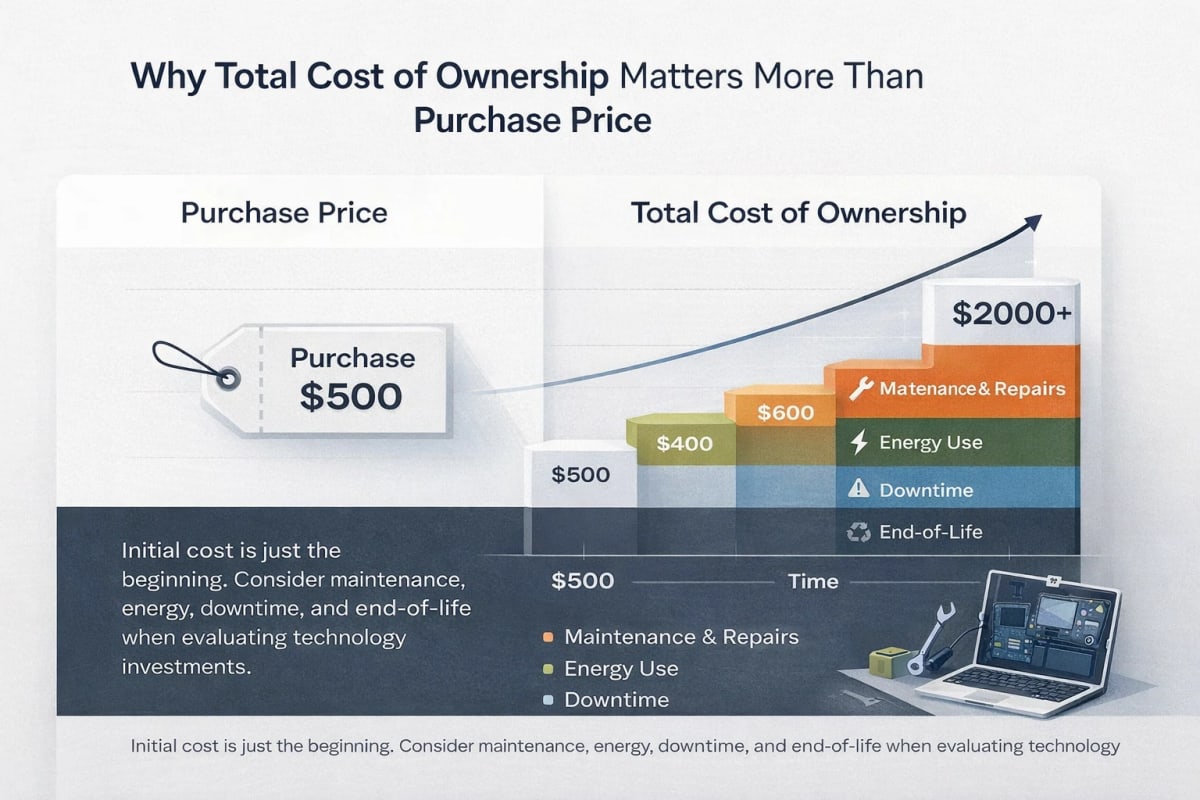
Total Cost of Ownership vs Purchase Price visualization

Total Cost of Ownership (TCO) provides a broader framework for evaluating technology investments by considering maintenance, energy consumption, reliability, downtime, repairability, and replacement cycles.

Why Initial Price Alone Fails as a Decision Metric

Many procurement decisions begin with comparing product prices, but the lowest price rarely equals the lowest long-term cost. Devices with a lower upfront cost often compromise on reliability, component quality, or repairability.

Over time, these compromises lead to higher costs through repairs, replacements, and operational interruptions. By focusing solely on purchase price, organizations may overlook the hidden expenses that emerge after deployment

Long-Term Cost Implications of Low-Cost Hardware

Low-cost hardware often appears attractive during procurement, especially when budgets are tight. However, lower-priced devices may use cheaper components, limited cooling systems, or non-repairable designs.

These limitations can result in:

  • Shorter product lifespans
  • Frequent failures
  • Higher replacement rates

Over several years, these factors may cause the total cost to exceed that of a higher-quality device purchased initially.

Operational Losses Linked to Poor Hardware Selection

Hardware failures affect more than repair budgets. They can disrupt operations, delay workflows, and reduce productivity.

For example:

  • Manufacturing equipment failure can halt production lines.
  • Server downtime can interrupt digital services.
  • Office device breakdowns can delay daily operations.

These indirect costs often represent a significant portion of TCO, yet they are rarely included in initial purchase comparisons.

Comparative Examples: Upfront Cost vs Long-Term Impact

Consider two devices:

Device A:

  • Purchase price: $400
  • Lifespan: 2 years
  • Limited repairability
  • Higher failure rates

Device B:

  • Purchase price: $700
  • Lifespan: 6 years
  • Repairable components
  • Higher reliability

Although Device A is cheaper initially, replacing it multiple times can result in higher cumulative costs compared to a single durable device.

Using TCO Signals to Support Better Procurement Decisions

Organizations can incorporate TCO signals into procurement processes by evaluating:

  • Product lifespan estimates
  • Warranty and service availability
  • Repairability scores
  • Energy efficiency ratings
  • Vendor reliability and support

These indicators provide insights into long-term cost behavior, enabling more strategic purchasing decisions.

The Link Between Repairability and Lower Total Cost

Repairable devices allow individual components such as batteries, storage modules, or screens to be replaced without discarding the entire product.

This leads to:

  • Lower repair costs
  • Extended device lifespan
  • Reduced waste generation

Repairability is therefore a critical factor in minimizing TCO.

Conclusion

Purchase price alone rarely reflects the true cost of a technology investment. Total Cost of Ownership offers a more comprehensive perspective by considering performance, reliability, maintenance, operational risks, and lifecycle impact.

Organizations that adopt TCO-based procurement strategies are better positioned to reduce hidden costs, improve operational efficiency, and support sustainable technology choices.

As hardware ecosystems continue evolving, evaluating devices through a lifecycle lens will become increasingly important for businesses seeking long-term value rather than short-term savings.

Ready to make smarter electronics decisions?

Join the waitlist for early access to Selectronyx and start evaluating electronics with clarity and confidence.

Get Early Access